
The Incredible Ups and Downs of the Spiritual Path
Ram Dass talks about how being on the spiritual path isn’t about chasing the great highs; it’s about embracing the lows and using them as your vehicle for awakening.

Like many of you, I find myself on the rollercoaster that is the path of spirituality and mindfulness. One day, I’m high on life and ready to see God in everyone I meet. The next day, I’m a curmudgeon yelling at kids to stop being so damn loud and get off my lawn. On my worst days, I’m stuck in traffic, testing out some of my more colorful vocabulary as I snarl at the other drivers on the road.
All of which is why I love Ram Dass so much. He encourages us to be on this path without judging ourselves for being human. We all love the highs: the feelings of Oneness, of being at home, of loving everyone. But it’s in embracing the lows where we find our true work. All that anger and anxiety and depression, let’s use it as a means for awakening. I know I’ll have reached enlightenment the day I stop yelling at people while driving…
--Noah Markus, Archivist, Love Serve Remember Foundation
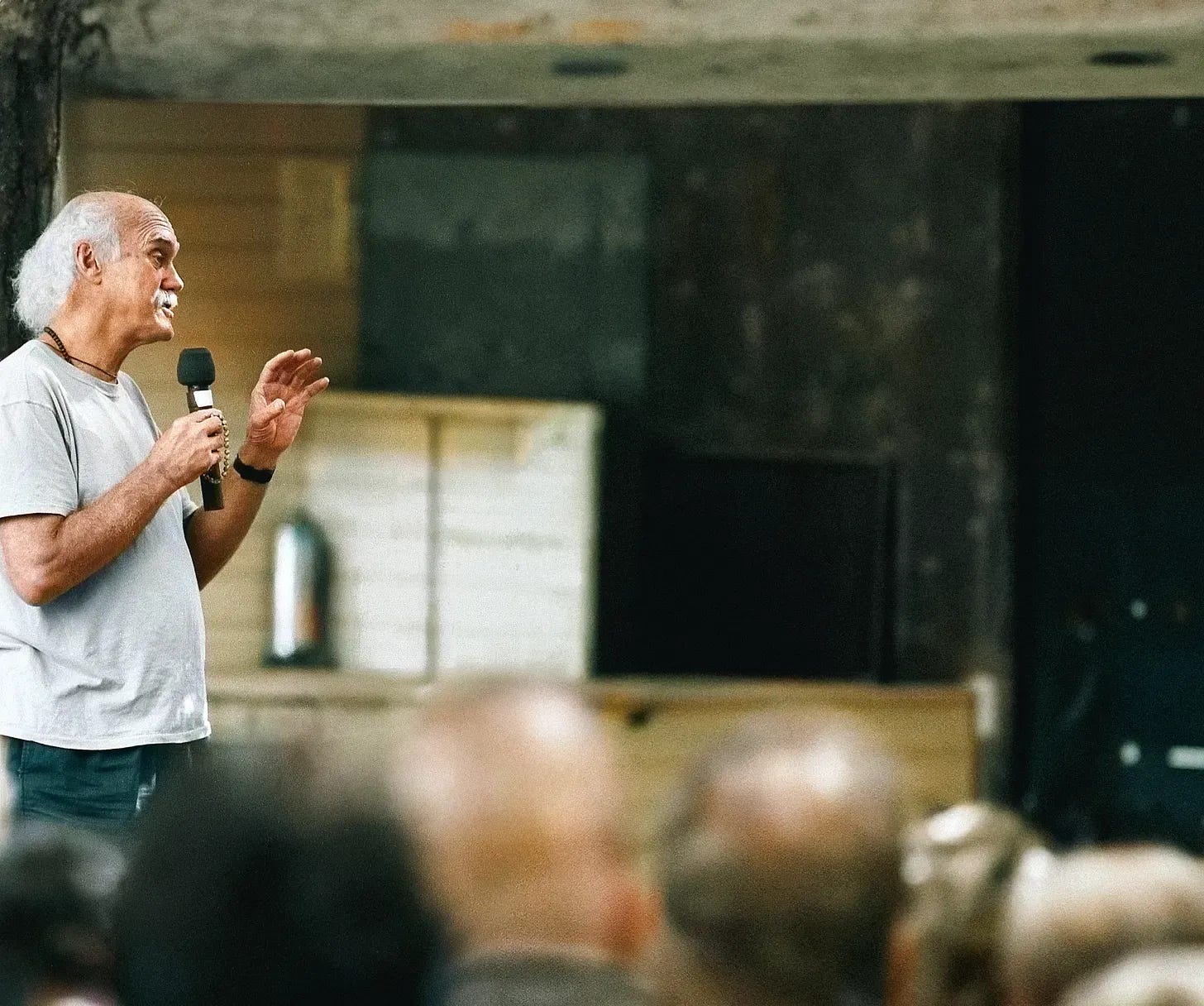
Ram Dass: There are many levels of spiritual involvement, from the very passing one of a thought every now and then that maybe, perhaps God exists, or a prayer when things get really rough, all the way on the continuum to the point where your relationship to God is a total preoccupation in your life.
And that transformation, which is called the spiritual path, happens often almost in spite of ourselves. It’s as if once the door has even a crack in it, and a little teeny bit of light comes through, you get hooked, and you almost find you can’t get away.
And there are stages on the path when you’d very much like to (you’re not supposed to say that, but it’s true), when you’d give anything to go back to being worldly again for one more rush. One more quick trip. But it’s too late. The hook has been planted. The process has been started.
Many of you, I’m sure, like me, go through incredible ups and downs. It’s a little bit like seeing a sailboat on the horizon where it disappears, and then it appears. There’s God. Oh, I lost it. Oh, there it is. Oh, no. And half the time you feel you fell out of grace, and the other half the time you’re drunk with it.
And how many ups and downs does it take before you recognize that the downs are, as much as the ups, part of the process? As you stop merely grabbing at the highs, merely grabbing at the feelings of palpable grace, and you start to utilize what are called your lows: your depressions, your anxiety, your doubt, your fear, your anger, your lust. You use it all in the process of awakening. It all becomes the stuff, the vehicle for the process of awakening.
Now, the framework in which my spiritual journey works focuses on the nature of the relationship of the mind or thought forms to the universe. And it concerns itself with the process of identification with thought forms.
I don’t want to be dense. I want to be very simple.
For example, I might, just as an exercise, follow my breath, which is called in the Buddhist tradition Vipassana meditation. I would merely follow my breath. I wouldn’t follow it in or out. I would merely notice it going by the end of my nose.
And I have gone and taken courses in which I have spent maybe ten days, maybe a month, from four in the morning until nine, ten at night, just following the breath at the tip of my nose. And every time my mind wanders, there’s a man sitting up on the dais who says to the group of 100, 150 people, “Please bring your mind back to your breath.”
Okay, now that seems like an idiot game. But what happens is it’s like taking a wild horse and trying to tame it in some way. Or a wild elephant, they talk about in India. Because the minute you bring your mind to a primary focus of any kind, or attempt to bring it to a primary focus, immediately your mind starts to grab at things to think about.
And if you would follow your own train of thought when you try to do an exercise like this, you would sit down and start to follow your breath, and I’ve described these routines before, but for me it’s something like, at the beginning, when I first started to do this: following your breath, breathing in, breathing out. Breathing in, breathing out.
This will never work.
Person up on the dais says, “Just bring your attention to your breath. Don’t judge. Just do it.”
Breathing in, breathing out.
I should have eaten more for dinner.
Breathing in. Breathing out. Breathing in, breathing out.
My knee hurts. I wonder if I can move without anybody seeing me.
Breathing in, breathing out.
This is absurd. I got a PhD for this?
Breathing in, breathing out, breathing in…
And after a period of time, when your mind quiets just a tiny little bit, you suddenly experience something happening within your body. And you go: breathing in, breathing out. It’s happening! Which is just another thought. You understand, alright?
Published by the Love Serve Remember Foundation, the nonprofit caretaker of Ram Dass’s teachings since 2010. Learn more at RamDass.org or join our virtual community and archive at Inneracademy.ramdass.org.
Looking forward to digging into this one!
Rollercoaster I tell you.